
General information, not a diagnosis or personal treatment plan. For urgent symptoms, seek emergency medical care rather than using an appointment form.
A first seizure, a seizure lasting over five minutes, or repeated seizures without recovery needs emergency medical help. Follow an established care plan where one exists.
Understanding this concern
Epilepsy is a brain condition associated with seizures. A seizure can have other causes, so having one does not automatically mean a person has epilepsy.
Symptoms to discuss
- Jerking or stiffening of the body
- Episodes of reduced awareness or staring
- Unusual sensations or behaviour during an episode
How it may be evaluated
A specialist asks what happened before, during and after an episode. Tests may include EEG, blood tests or brain imaging when indicated. A witness’s account can help.
Investigations are selected for the individual. Contact the clinic to confirm where any prescribed imaging can be arranged.
Treatment & support
Anti-seizure medicines are a common treatment. A specialist develops an individual care plan and reviews how well treatment is working.
When to seek help
A suspected first seizure needs prompt medical assessment. Recurrent episodes or changes in a known seizure pattern also need professional review.
At Hyderabad Neuro Centre
The clinic lists epilepsy and EEG among its services. Contact the clinic to confirm consultation and test availability. MRI availability on site is not established.
Meet Dr. Gautham GundaboluMake the consultation useful for you
Organize the information you want to discuss. The following prompts can help you prepare questions without choosing a diagnosis or treatment yourself.
- A clear account of the concern and any existing reports you want reviewed.
- Questions about the purpose of any EEG or other investigation already requested.
- Ask how to discuss follow-up and a care plan with the treating clinician.
Ask the clinic about fees, appointment length and any documents required. See the first-consultation guide for practical planning.
Epilepsy consultation in KPHB: plan your next step
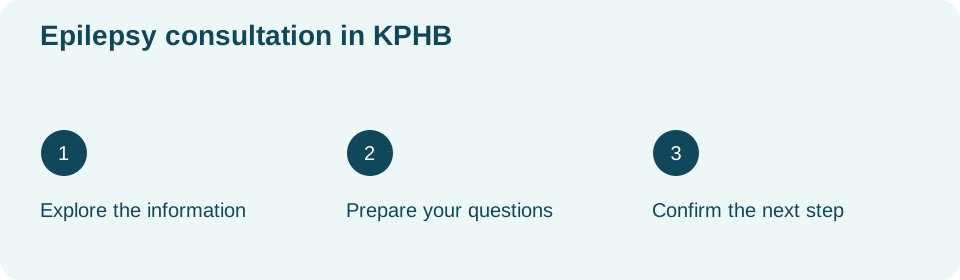
Put events into a clear sequence
When discussing episodes that might be seizures, explain what was noticed before, during and afterwards, using ordinary language. A companion who witnessed an event may be able to add information the patient does not remember. Ask the clinician what details would be most helpful rather than trying to label the event yourself. A written account can help organize the conversation, but it does not confirm epilepsy.
Ask how testing fits the assessment
An EEG is one source of information that a clinician may consider. Ask why a recording is being requested, which type is intended and how the result will be discussed alongside the history. Read the EEG service and preparation guides for questions to ask the clinic. The presence of an EEG page does not mean that everyone with an episode needs that test.
Clarify personal instructions directly
Bring your current prescription information and previous reports if available. Questions about medicine changes, safety, work, driving or activity should be discussed with the treating clinician. General educational content cannot provide individual clearance or replace an existing care plan.
Sources & content status
Prepared 7 November 2026.
Clinical information describes general care. A listed treatment or investigation is not a claim that every option is available at this clinic.