
General information, not a diagnosis or personal treatment plan. For urgent symptoms, seek emergency medical care rather than using an appointment form.
This page is for planned consultations. A sudden serious illness or an immediate safety concern requires urgent medical help, not a routine appointment enquiry.
Understanding this concern
Insomnia means regularly having difficulty sleeping. It may involve trouble falling asleep, waking during the night or waking too early. Daytime tiredness and concentration difficulties can also occur.
Symptoms to discuss
- Difficulty getting to sleep or staying asleep
- Waking early and struggling to return to sleep
- Sleep difficulties affecting daytime functioning
How it may be evaluated
Assessment considers your sleep pattern, daily routine, medicines and other symptoms. Different sleep problems have different causes; a clinician can decide whether further assessment or referral is needed.
Investigations are selected for the individual. Contact the clinic to confirm where any prescribed imaging can be arranged.
Treatment & support
Management may involve changes in sleep habits and psychological approaches such as cognitive behavioural therapy. Medicines are not suitable for everyone and should be discussed with a clinician.
When to seek help
Seek medical advice if sleep difficulties continue, routine changes have not helped or daytime functioning is affected. Do not drive when sleepy.
At Hyderabad Neuro Centre
Sleep Issues (Insomnia) appears on the clinic’s specialty list. This does not establish a sleep laboratory, sleep study service, CBT programme or specific sleep-medicine certification.
Meet Dr. Gautham GundaboluMake the consultation useful for you
Organize the information you want to discuss. The following prompts can help you prepare questions without choosing a diagnosis or treatment yourself.
- A short record of your usual bedtime, waking time and main sleep concern.
- How the difficulty affects daytime activities and what you have already tried.
- Ask whether further evaluation or a different sleep-service referral is appropriate.
Ask the clinic about fees, appointment length and any documents required. See the first-consultation guide for practical planning.
Insomnia consultation in KPHB: plan your next step
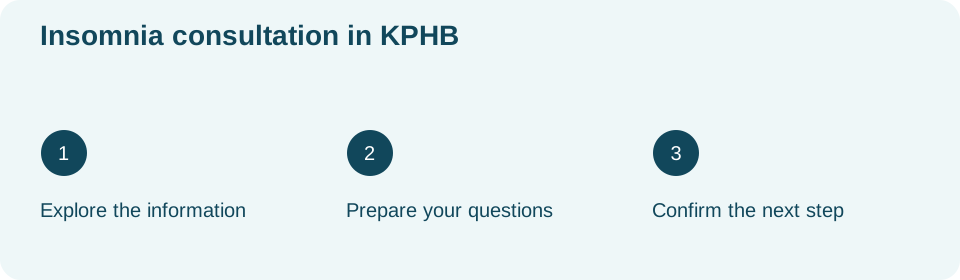
Describe your usual sleep routine
When preparing for a sleep-related discussion, consider what you mean by poor sleep and how it affects your day. Note whether difficulty falling asleep, waking during the night or waking earlier than expected is the main concern. Describe the pattern in your own words and include questions about the effect on work, concentration and ordinary routines.
Bring questions about assessment
Tell the clinician about current medicines and previous advice you want clarified. Ask what information would help distinguish possible contributors to the sleep difficulty and whether further assessment is needed. The clinic lists insomnia among its specialties, but this does not verify a sleep laboratory or overnight monitoring service. Availability of any proposed investigation must be checked directly.
Avoid making changes based on a checklist
This page is preparation for a conversation, not a personalized sleep programme. Do not use it to select sleeping medicines, change a prescription or adopt sleep-deprivation instructions. Agree the next steps with the clinician and ask how to arrange a review if concerns continue.
Sources & content status
Prepared 7 November 2026.
Clinical information describes general care. A listed treatment or investigation is not a claim that every option is available at this clinic.